
Policy Evidence Workflow for a Local Government White Paper
I built the working system behind evidence capture, thematic synthesis, drafting, and review for the South African White Paper on Local Government process.

Guides for teams trying to turn scattered records, spreadsheets, submissions, and operational data into information systems that are easier to search, analyse, and report from.
Use this hub when you know the broad problem area and want the articles, service route, and next step in one place.
This topic fits teams that already have the information, but need a clearer structure before analysis, retrieval, or reporting can move properly.
Use this when information is spread across forms, spreadsheets, folders, and submissions without a system that people can actually work from.
These examples show the same workflow problem in practice, with the public-safe detail kept focused on the system built, the evidence handled, and the output produced.
These tools are a practical way to estimate scale, risk, capacity, or workflow drag before turning the issue into a project brief.
These articles sit under this static topic hub, so topic navigation no longer relies on filtered query URLs.
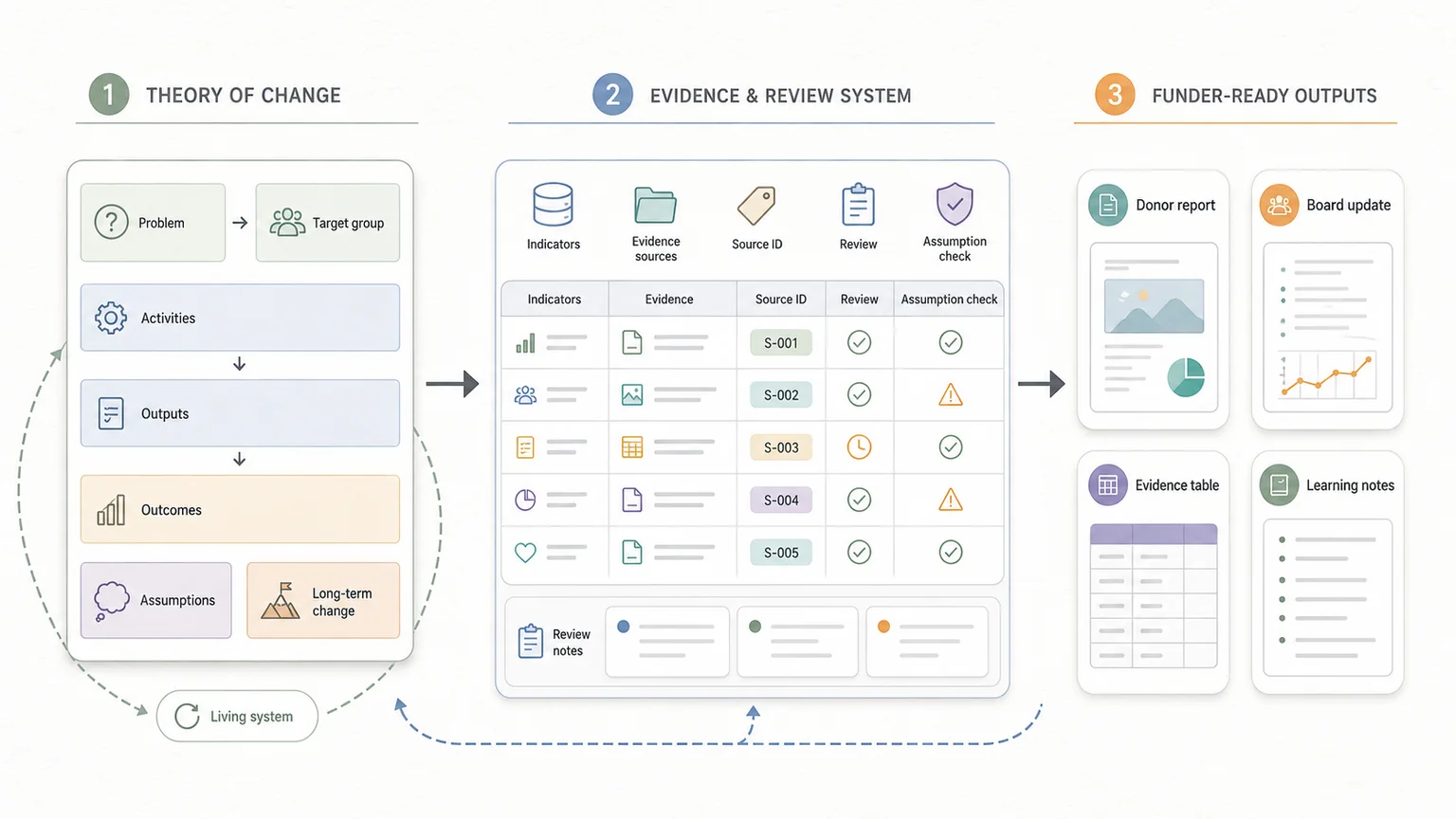
A practical guide for South African NPOs that need to turn a Theory of Change into clear outcomes, indicators, assumptions, evidence tables and funder-ready re…
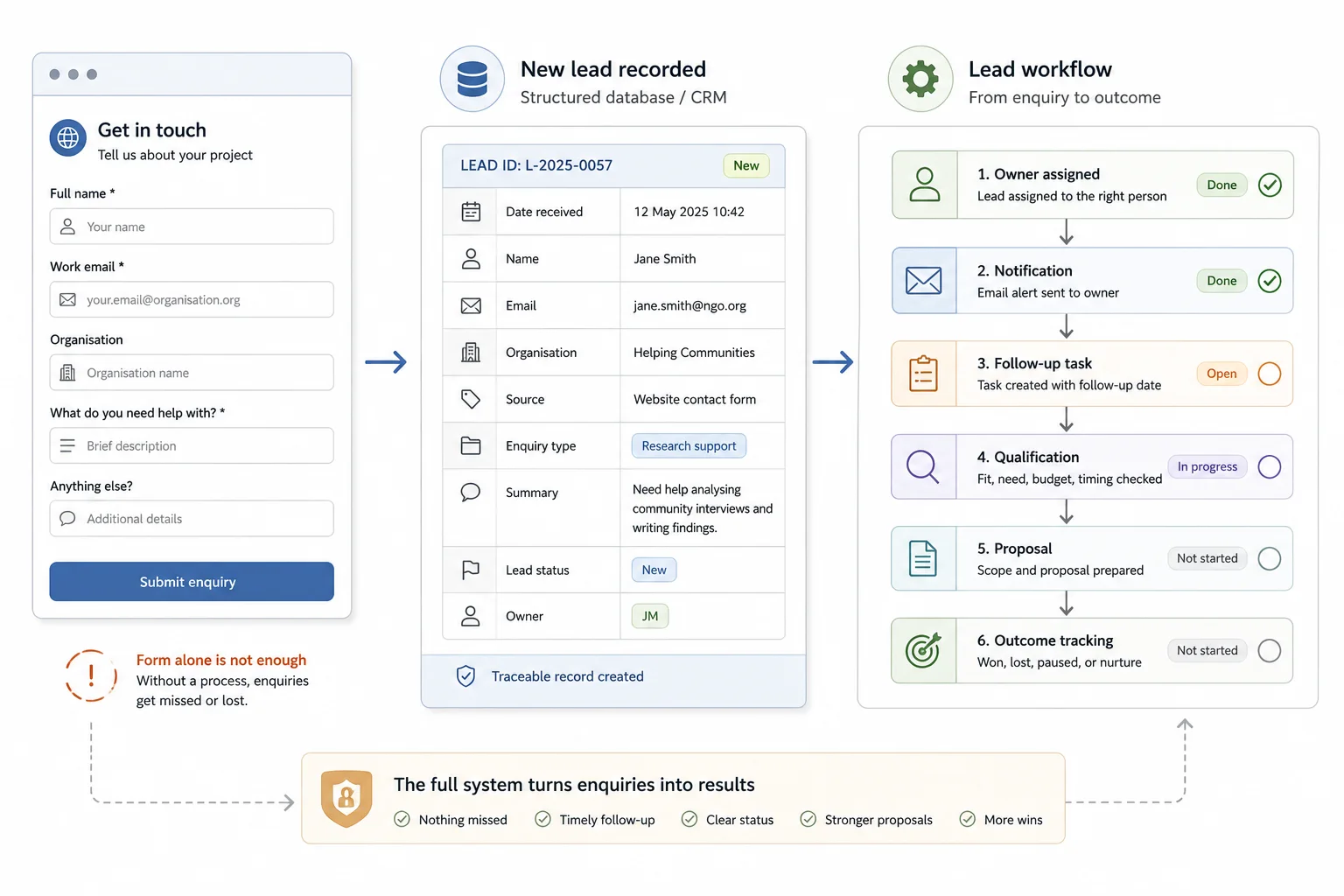
A website form can capture enquiries, but it will not fix a broken lead process. Learn how structured lead records, routing, CRM automation, follow-up tasks, a…
A practical buyer's guide to 7 independent database architect consultants, including who each one is best for and how to choose the right fit.
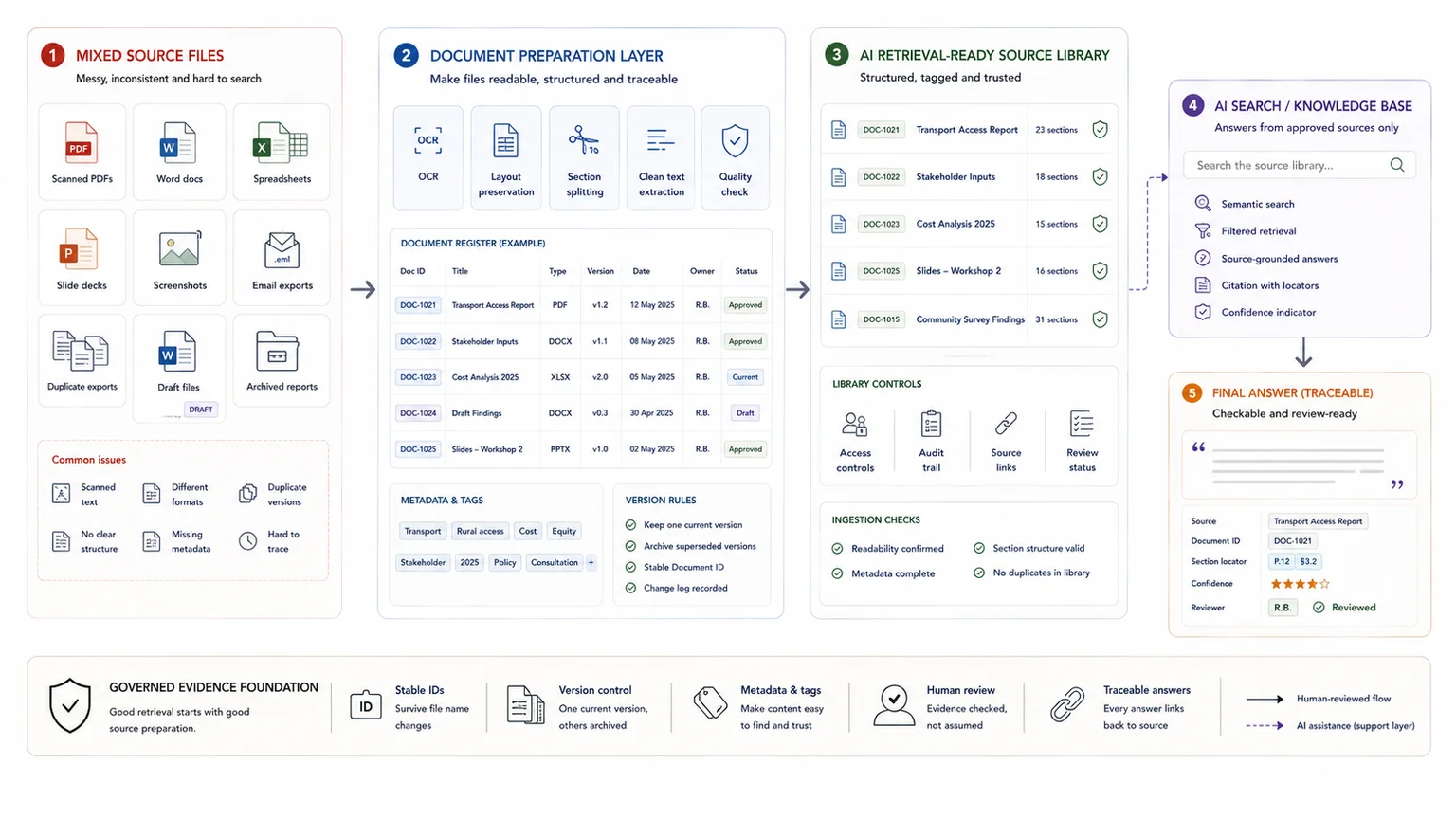
Prepare PDFs, spreadsheets, and mixed files for AI retrieval with OCR, layout-aware parsing, metadata, version control, and document QA.
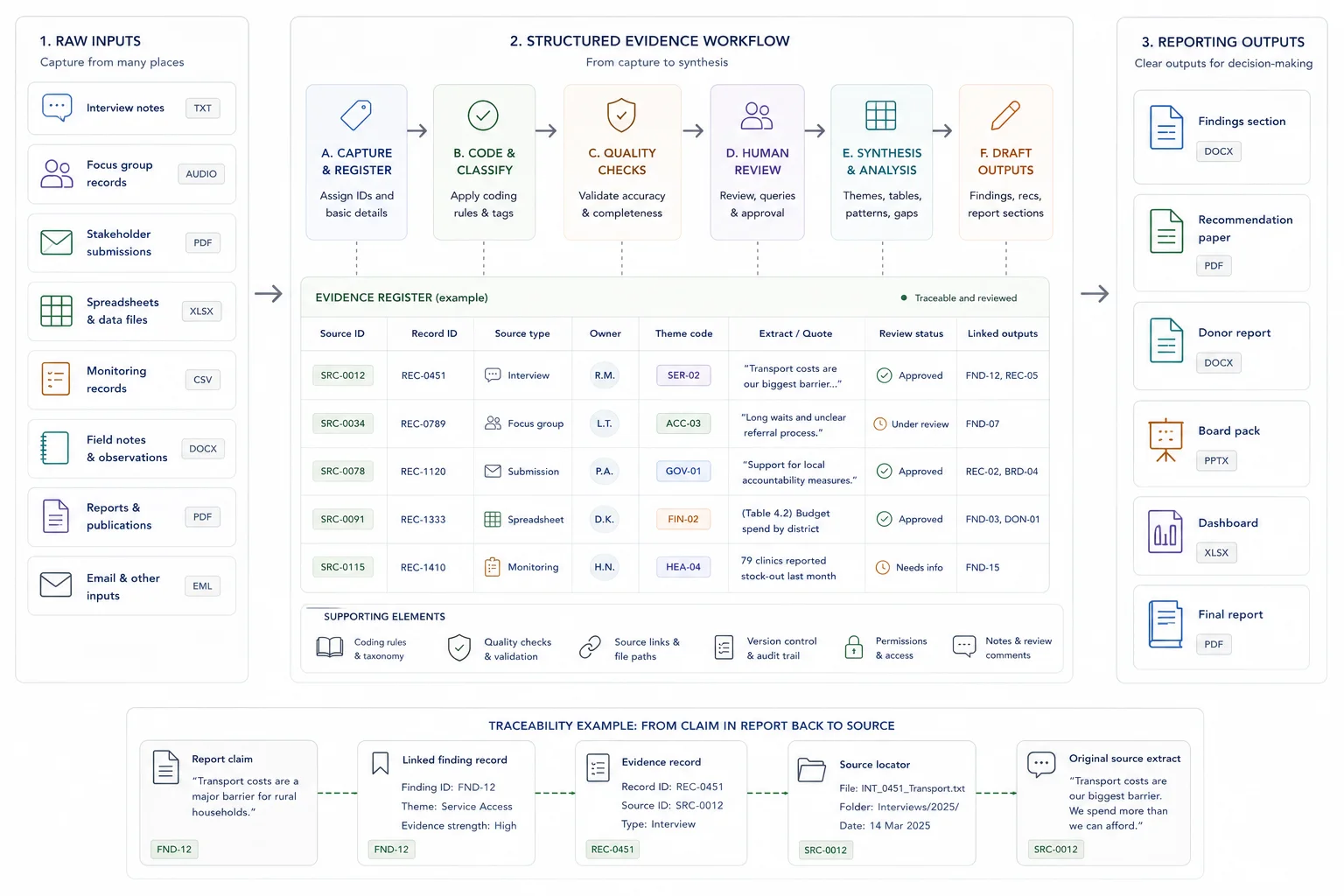
Learn how to build evidence workflows that improve reporting, source traceability, and decision-ready findings.
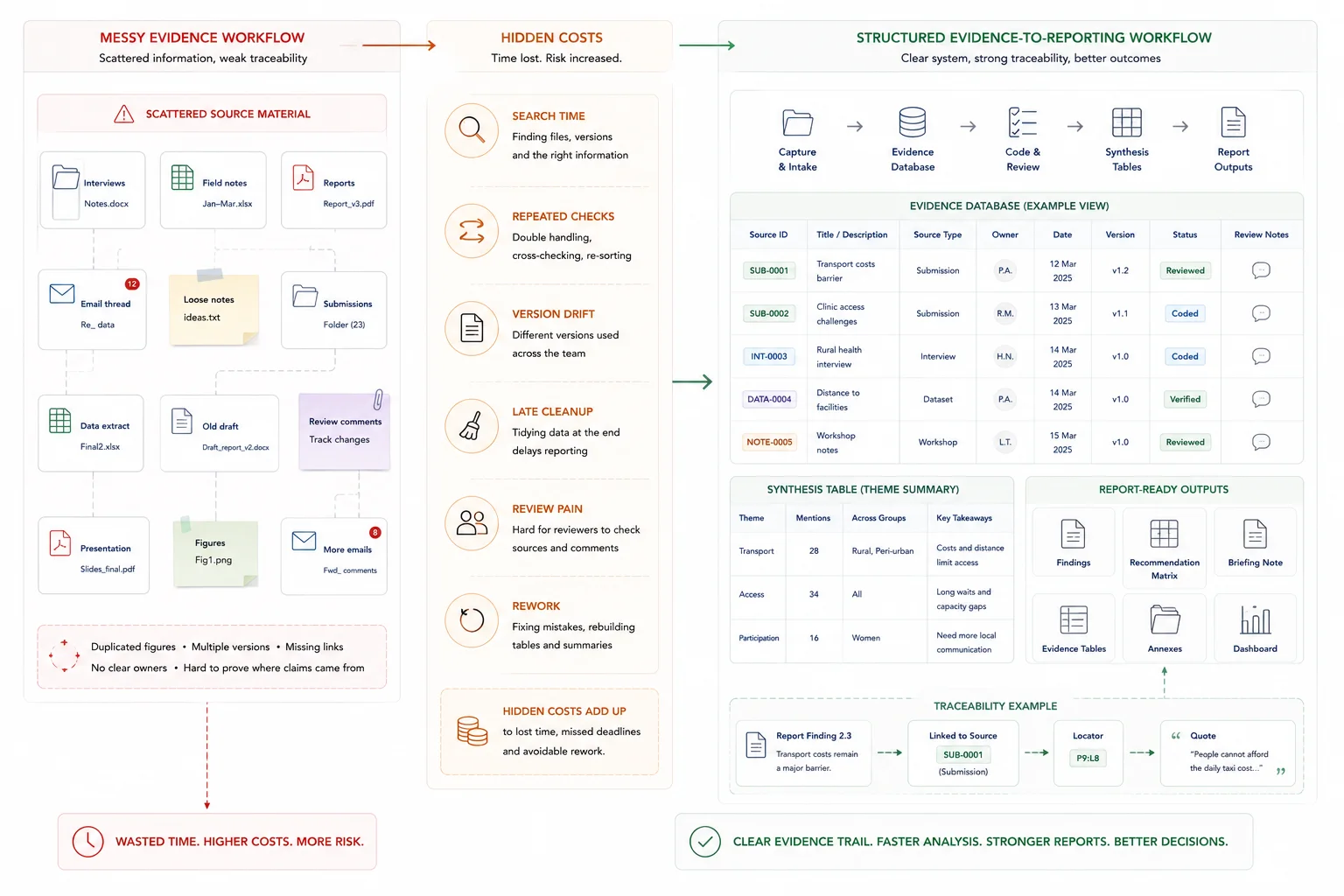
Messy evidence workflows waste capacity, raise reporting risk, and create review pain. Learn the signs and what a better system looks like.
Most evidence and reporting problems touch more than one stage. These hubs keep each topic on its own static page.
Use these answers to choose the next article, service page, calculator, or proof point.
This hub is for teams whose information is spread across spreadsheets, forms, folders, submissions, and internal records. Start with the database architecture service, then use the real cost of messy evidence workflows guide to spot where the structure is slowing analysis or reporting.
Start with The Real Cost of Messy Evidence Workflows. If the problem also affects document search or AI retrieval, read How to Prepare Documents for AI Retrieval next.
For proof, look at the UNICEF Zambia evidence workflow and the White Paper evidence workflow. For a diagnostic starting point, use the Search and Review Time Savings Calculator.
Send a short brief with the source material, output needed, deadline, and current tools. I can help work out whether the next fix is structure, synthesis, reporting, retrieval, or decision support.